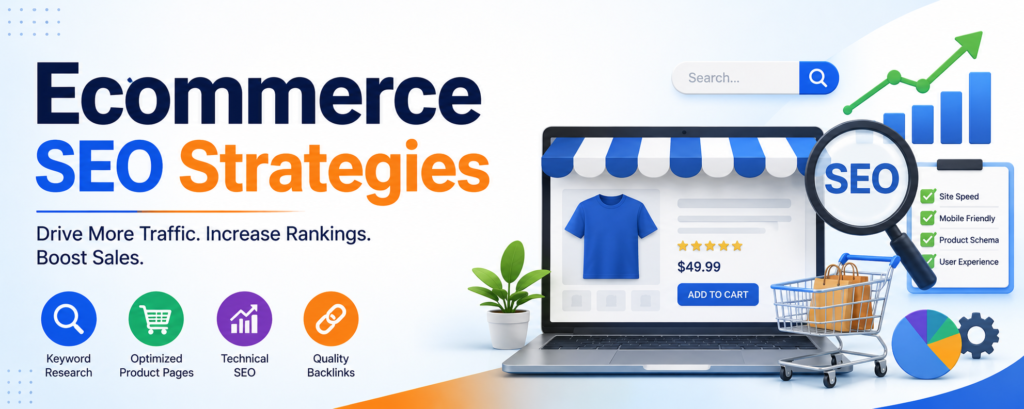
In this era of ecommerce, standing out is challenging. An effective and productive ecommerce SEO strategy can make all the difference. It helps your online store rank higher in search results. This means more visibility, traffic, and sales.
SEO is about more than keywords. It is more holistic and a strategy to improve your site. This includes everything from your site structure, to user experience!
Search Engine Optimization (SEO) — the good ol’ workhorse of ecommerce marketing. More visits are converted to buyers by a well-optimized site. Which is a must if you want to last.
Digital marketing SEO strategies are constantly transforming in this modern era. Staying updated with the latest trends is essential & crucial . This guide will explore well proven ecommerce SEO strategies to boost sales.
What is Ecommerce SEO and Why Does It Matter?
Ecommerce SEO is the practice of optimizing an online store for search engine ranking. It includes volumes of practices that help you gain more organic visitors. It is better to outrank your competitors for the products instead of them.
Why is ecommerce SEO important? In simple, person language — it affects visibility and sales in the most direct way possible. It makes it easy for your potential customers to find your products on an optimized site. With better search engine rankings, there comes more quality traffic to your website and hence a higher chance of sales and conversions.
Here are some important reasons that beg you to pay attention towards ecommerce SEO:
- Enhances website visibility and reach
- Increases organic search traffic
- Boosts sales and conversions
An effective ecommerce seo strategy can provide you with a competitive advantage. It keeps your business afloat in a market that is continually growing. It follows the best practice of Search Engine Optimisation, which contributes towards a durable online existence. Continued success with SEO is necessary to remain relevant as search engine algorithms change and evolve.
Building a Strong Foundation: Keyword Research for Ecommerce
Keyword analysis is an essential aspect of any ecommerce seo method. It sets a foundation for generating focused traffic to your website. Fueling your keywords that best match such users will probably get you the users that want to buy your products.
The first step is finding keywords that are relevant to your niche. Long-tail keyphrases have less competition and usually convert better, so work on them. Such keywords usually signify high purchase intent and result in a high conversion rate.
So, what step can you take for keyword research?
- Find high-frequency keywords with tools like Google Keyword Planner
- Extract strategic information from competitor keywords
- Focus on longtail keywords with buyer intent
- Match your keywords with product categories and pages
The balance between keyword competition and volume is the key. You want very common terms that get searched a lot that are not too competitive. Using these keywords that are researched well throughout your site gives you visibility.
Keyword research is the first step and more precisely it is, better will be your ranking potential. Connect your offerings to user searches for natural traffic and sales. This is the basic step that makes sure your ecommerce page finds the right audience with minimum effort.
Read Related – LLMS.txt Explained: Importance and Implementation for Beginners
Optimizing Site Structure and Navigation
A well-organized site structure is crucial for both user experience and search engines. It ensures users and crawlers can find content easily, improving visibility. Begin by designing a clear and logical hierarchy for your ecommerce site.
Nobody will stay too much when a site is not user friendly. Page navigation makes it easier for users to find the product they want, which reduces bounce rates. Organize menus intuitively and remove unnecessary page visits by creating logical subcategories.
Here are some strategies that you can use to improve your site structure:
- The shallow site structure (not more than three levels deep)
- Add breadcrumb navigation so you can trace back
- Make sure urls are descriptive and keyword rich
- Interlink the relevant products and categories
With a more efficient site structure, you make it easier for search engines to crawl and index content, which strengthens your Ecommerce SEO Strategy and improves overall search visibility. For example, breadcrumb navigation better defines the site structure in context for both search engines and end users. Having a well-structured site architecture makes shopping easier for users and more favorable for search engines. A strong Ecommerce SEO Strategy not only helps users stay engaged with your products but also allows them to shop more easily and efficiently.
On-Page SEO: Product Pages, Categories, and Content
On-Page SEO is very important for ecommerce sites. It helps search engines discover your products and makes it appealing to users. Create new product titles and descriptions.
Product titles need to be brief while including keywords. Descriptions should be thorough while remaining concise i.e highlighting key features and benefits. One more thing to remember is that your meta titles, and descriptions should be optimized for search engines as well.
Images of high quality are essential. Use keywords in alt text for images (as an added value and SEOfriendly) You have practiced SEO best practices here, but more importantly, this is critical for user experience.
Now, if you want to optimize for on-page SEO, take a checklist of this:
- Add primary keywords into product titles
- Write unique and engaging descriptions
- Use images with alt text that specify the size of the image.
- Optimize meta tags with keywords
Do not neglect your category pages. Make them keyword-rich, informative, and user-friendly as part of a successful Ecommerce SEO Strategy. Strong on-page SEO helps users find exactly what they are looking for, while strategically written keyword-focused content increases the visibility, rankings, and engagement of your ecommerce site.
Technical SEO Essentials for Ecommerce Sites
Technical SEO builds the backbone of an effective and productive ecommerce SEO strategy. It ensures that search engines can easily crawl and index your ecommerce website. A well-optimized website performs better in rankings and enhances overall user experience.
Start with page load speed. Websites are ranked higher by Google or other search engines when they are fast and the users stay more engaged. Consider using a tool like Google PageSpeed Insights to help you see where your opportunities for improvement lie.
Also, you need to move from http to https since this will secure your site and begin building trust with users. Security is a ranking factor and is also necessary to keep customers trusting you.
Building an XML sitemap is important for search engine crawlers. It is useful as it aids them in understanding your site better, and indexing all pages.
Key technical SEO components include:
- Fast page load speed
- Secure connections via HTTPS
- Comprehensive XML sitemaps
- Mobile optimization for better user experience
Internal linking also plays a significant role. It boosts the flow of link equity throughout your site. These technical SEO elements are essential for a successful ecommerce presence. Keep your site up-to-date with these practices to maintain its health and visibility.
Leveraging User-Generated Content and Reviews
User-generated content (UGC), like reviews, is a powerful part of ecommerce SEO strategy. It boosts credibility and online trust among potential visitors or customers. Search engines value fresh and diverse content, making UGC beneficial.
Get customers to write a review on your product pages. Reviews offer search engines unique content to crawl. This can result in better rankings and more conversions.
UGC also enhances user experience. By allowing customers to share insight — potential buyers are receiving input and feedback directly from other consumers so confidence can build. Establishing a review system can help deliver some good search engine optimization and user engagement.
Ways to utilize user-generated content include:
- Inviting customer reviews on product pages
- Encouraging photos and videos from users
- Highlighting featured testimonials on your site
Incorporate UGC into your ecommerce strategy to gain a competitive advantage. It enriches your site with authentic content, fostering both SEO benefits and customer relationships.
Building Authority: Link Building and Social Signals
SEO and building authority in ecommerce. Good quality backlinks from credible sites improve your ecommerce SEO strategy by indicating to search engines that you can be trusted. Backlinks from reputable sites give a positive influence on domain authority.
Social signals are also not considered direct ranking factors, but they help with visibility. They assist with driving traffic and indirectly contribute to SEO; A well-established social presence can result in more links and citations back to your site.
Just be a value wagon and let the backlinks come to you! Team up with influencers and leaders in the field. Distributing your content on social media platforms
Some of the key strategies which help you command authority are as follows:
- Guest blogging on industry websites
- Working on sharing content with influencers
- Creating shareable infographics and resources
In combination, link building and social signals establish trust and authority. They are great for traffic, which directly correlates with increased ecommerce marketing effectiveness.
Local and Mobile SEO for Ecommerce Success
Local SEO is especially important for businesses with physical locations. It guarantees your store shows up in local searches, helping to drive traffic nearby. Google My Business like listings increase visibility.
As shopping transitions to mobile devices, mobile optimization becomes important. Mobile friendly sites increase user experience and improve rankings Mobile SEO depends on having a mobile site with fast load times and responsive design.
On the other hand, local and mobile SEO strategies complement one another to elevate reach and engagement. Having NAP (Name, Address, Phone) consistent all over the platforms. Utilize local keywords and optimise for mobile speed
Consider these steps for local and mobile SEO:
- Optimize for location-based searches
- Ensure a mobile-responsive design
- Use Google My Business effectively
Both strategies drive traffic from local and mobile searches, enhancing ecommerce success.
Advanced Strategies: Schema, Voice Search, and AI Trends
Advanced SEO techniques are the key to improve ecommerce visibility. Schema markup is essential. It aids search engines in better understanding your content. By using it, you can get rich snippets in the search result.
Voice search is on the rise. Maximize the conversational phrases people use during voice queries. That can increase your chances of being featured in voice search.
Artificial Intelligence (AI) in SEO is shaping ecommerce SEO strategy. AI tools can predict trends and optimize marketing efforts. Incorporate AI-driven analytics for a competitive edge.
Consider following some advanced ecommerce SEO strategies:
- Use schema markup for rich snippets
- Optimize for voice search queries
- Leverage AI analytics for insights
Advanced strategies like these can position your ecommerce business at the forefront of digital marketing.
Measuring, Monitoring, and Adapting Your Ecommerce SEO Strategy
Measuring your SEO strategy is essential for growth! Use tools like Google Analytics & Search Console These platforms give you an idea of how users discover your site.
Tracking results constantly shows you what is working. Measure key metrics: organic traffic, a number of pages per session, bounce rates, conversion rates. Those data points informed your strategic revisions.
Adapting your strategy ensures the continuity of success. Trend analysing and adapted analysis based on findings You can adjust your strategy for the latest news.
Key monitoring activities include:
- Reviewing analytics regularly
- Identifying trend shifts
- Adjusting SEO tactics as necessary
Success in ecommerce SEO relies on a proactive approach to measurement and adaptation.
Common Ecommerce SEO Mistakes to Avoid
Ecommerce SEO pitfalls can waste precious time and money. One of the biggest mistakes people omit is mobile optimization. Not doing so will result in lost traffic and sales opportunities.
A common mistake is duplicate content. This could hurt rankings and visibility. Make it unique and interesting for every single product.
Key mistakes include:
- Ignoring mobile optimization
- Using duplicate content
- Overlooking technical SEO issues
Awareness of these blunders can help you improve your ecommerce SEO. Read important updates about the trends in which best practices will remain — or not — for your site to continue thriving.
Read Related – Exploring the Future of Generative AI
Conclusion: Evolving Your Ecommerce SEO for Long-Term Growth
With ecommerce SEO, you need to change along with the landscape. Conduct audits and updates to make sure your strategy is functional. Keeping information about new trends and algorithm changes to always get the edge over your competitors.
Be customer-centric and opportunistic in how that strategy is executed. This means that you can maintain ongoing growth with the right ecommerce SEO adjustments keeping your website alive and well. Keep in mind that SEO is not a one-off task – it requires consistent effort, creativity and innovation.