Search engine optimization is no longer simply about finding keywords with high search volume and adding them repeatedly to a webpage. Modern SEO requires a deeper understanding of what users actually want when they enter a search query. This is where Keyword Intent becomes an important part of keyword research and content planning.
Keyword intent refers to the purpose or objective behind a user’s search. Understanding this purpose helps businesses create content that matches what searchers expect to find. When keyword research is combined with intent analysis, SEO strategies can become more relevant, targeted, and useful for both users and search engines.
What Is Keyword Intent?
Keyword intent describes the reason a person searches for a particular phrase on a search engine. Two keywords may look similar but represent completely different expectations.
For example, someone searching for “what is SEO” is probably looking for educational information, while someone searching for “SEO agency in Delhi” may be researching service providers. Similarly, “buy running shoes online” indicates a stronger purchasing intention than “best running shoes for beginners.”
Recognizing these differences allows SEO professionals to organize keywords according to the type of content users are likely to need.
Read Related – Fundamentals of Digital Marketing: A Complete Beginner’s Guide
Why Keyword Intent Matters in SEO
Search engines aim to provide results that satisfy the purpose behind a search query. Therefore, creating content without considering user intent can make it difficult for a webpage to attract the right audience.
Keyword intent helps SEO professionals:
- Develop content that matches searcher expectations
- Select appropriate keywords for different website pages
- Improve content relevance and usefulness
- Build more effective content strategies
- Attract visitors who are more closely aligned with a business objective
- Avoid targeting keywords that do not match the purpose of a page
For example, a product page should generally target commercially relevant searches rather than purely informational queries. On the other hand, a blog explaining “how keyword research works” should focus on informational searches.
Four Common Types of Keyword Intent
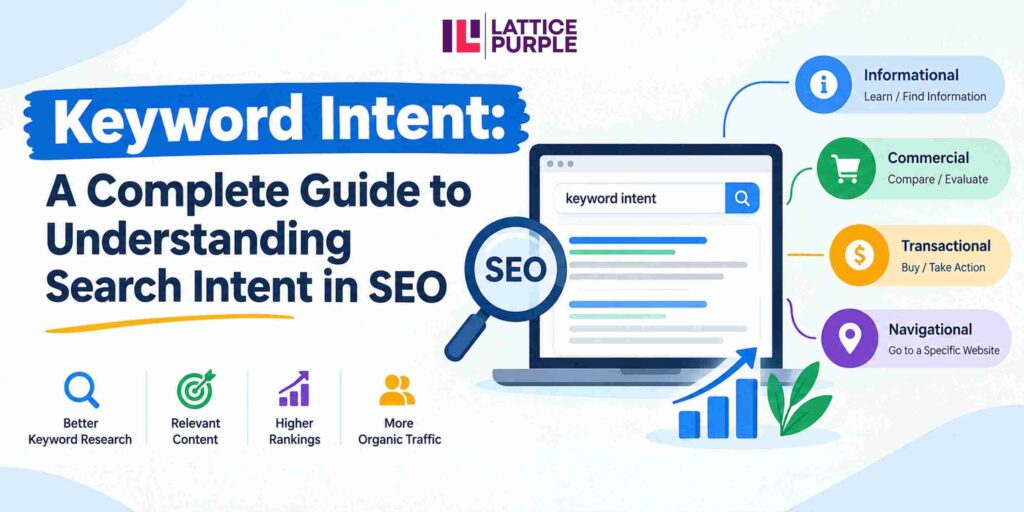
Keyword intent is commonly divided into four major categories: informational, navigational, commercial, and transactional.
1. Informational Intent
Informational keywords are used when people want to learn something, answer a question, or understand a topic.
Examples include:
- What is keyword research?
- How does SEO work?
- Benefits of technical SEO
- How to improve website rankings
These searches are particularly useful for blogs, guides, tutorials, FAQs, and educational resources. Informational content can also introduce users to a brand before they are ready to make a purchase.
2. Navigational Intent
Navigational searches occur when users are trying to find a particular website, company, service, or webpage.
Examples include:
- Google Search Console
- LinkedIn login
- Nike official website
- Ahrefs keyword explorer
Users conducting navigational searches often already know what they are looking for. For businesses, optimizing brand pages and ensuring that important website sections are easily discoverable can help satisfy this type of intent.
3. Commercial Intent
Commercial searches generally indicate that users are researching products, services, or solutions before making a decision.
Examples include:
- Best SEO agency in India
- SEO tools comparison
- Best keyword research tools
- SEO agency reviews
These users may not be ready to purchase immediately, but they are often evaluating available options. Comparison pages, service guides, case studies, reviews, and detailed landing pages can be suitable for commercial-intent keywords.
4. Transactional Intent
Transactional keywords indicate a stronger intention to complete an action, such as making a purchase, booking a service, or requesting assistance.
Examples include:
- Buy SEO software
- Hire an SEO agency
- SEO audit service
- Purchase keyword research tool
These keywords are particularly valuable for service and e-commerce websites because they can connect search demand with business-focused pages.
Read Related – Maximizing Your Budget with Affordable Local SEO Services
How to Identify Keyword Intent During Research
Identifying keyword intent should be an important step in the keyword research process. Start by examining the wording of a search query. Terms such as “what,” “why,” “how,” and “guide” frequently indicate informational intent. Words such as “best,” “top,” “review,” and “comparison” can suggest commercial research.
However, keywords should not be classified based only on individual words. Search engine results can provide additional insight.
Search the target keyword and examine the pages appearing in prominent positions. If most results are blog articles and educational guides, the query may have informational intent. If the results primarily contain product pages, service pages, or category pages, the query may have commercial or transactional intent.
This process is sometimes called SERP intent analysis and can make keyword research more accurate.
Keyword Intent and Content Mapping
Once intent has been identified, keywords should be mapped to the appropriate website pages.
For instance, informational keywords can be assigned to blog posts, while transactional keywords may be better suited to service or product pages. Commercial keywords can support comparison pages, solution pages, or detailed service content.
This approach helps prevent multiple pages from competing for the same search purpose. It also creates a more organized website structure in which each page has a clear role.
Avoiding Keyword Intent Mistakes
One common SEO mistake is targeting a keyword simply because it has a high search volume. High volume does not necessarily mean that the keyword is relevant to a particular business or webpage.
Another mistake is creating content that does not satisfy the searcher’s expectations. A user searching for a detailed tutorial may be disappointed by a short promotional page. Similarly, someone looking for a service may not find a general educational article useful.
The objective should therefore be to balance search volume, relevance, competition, business value, and keyword intent rather than focusing on volume alone.
Read Related – Google.com/goto Explained: What It Means for Google Search Results
Final Thoughts
Keyword intent provides an important connection between keyword research and effective SEO content. By understanding why people search, businesses can select more relevant keywords, create better content, and structure their websites around genuine user needs.
Rather than asking only, “How many people search for this keyword?” SEO professionals should also ask, “What does the searcher expect to find?”
When keyword research, SERP analysis, content mapping, and on-page optimization are aligned with that expectation, an SEO strategy becomes more focused and user-oriented. Ultimately, understanding keyword intent can help businesses move beyond simply attracting search traffic and focus on attracting the right type of search traffic.